Lawful Development Certificates across London

Lawful Development Certificate for existing use.
A Lawful Development Certificate for existing use confirms that a building, extension or use that’s already in place is lawful, usually because it has existed long enough to be immune from enforcement. We gather the evidence, draw what’s there and make the application.
✓ Selling a property✓ Work without permission✓ Flats & HMOs✓ Outbuildings
✓
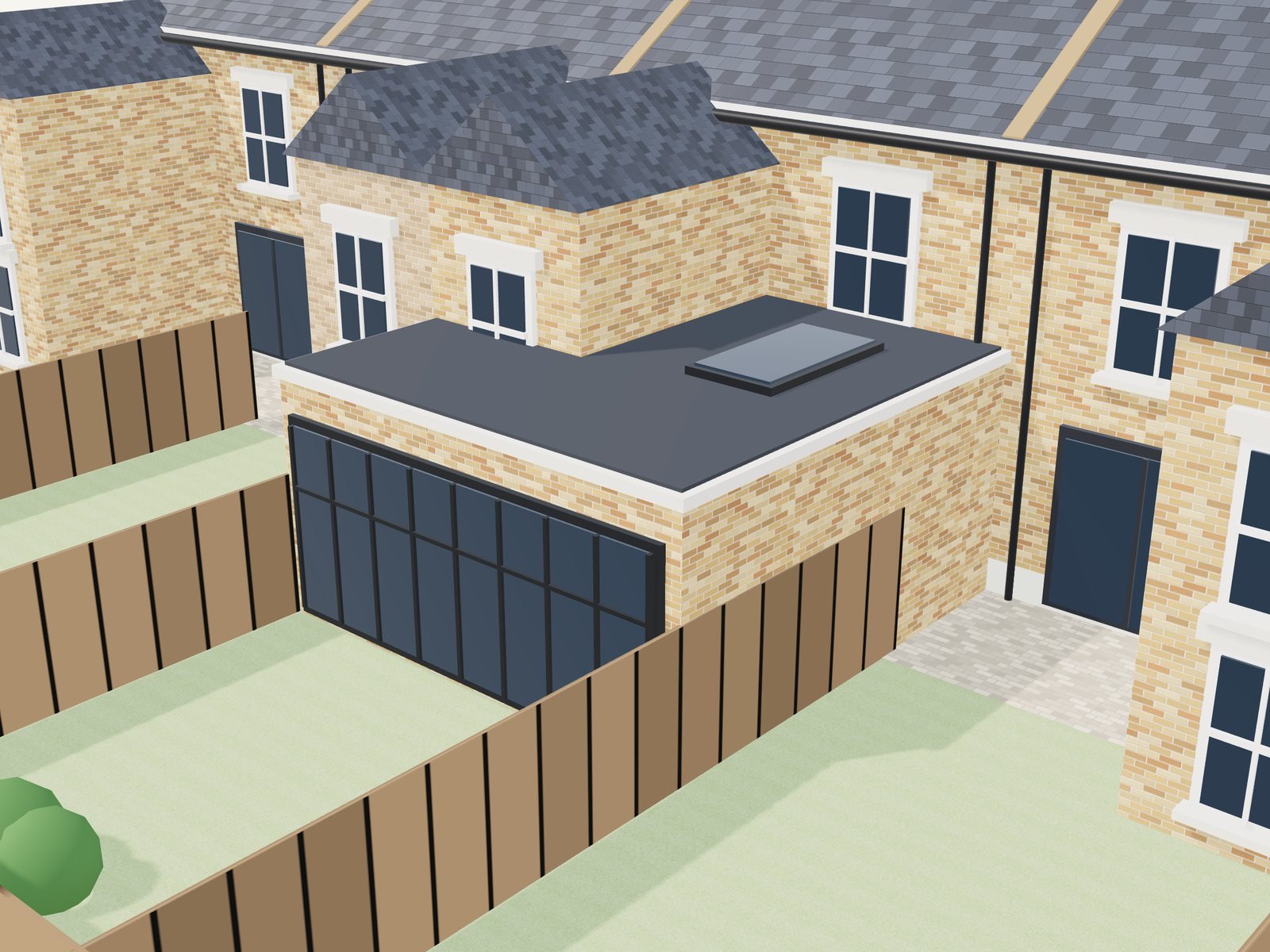
- WorkRear extension
- TestTime limit passed
- DecisionLawful ✓
An existing-use LDC, in short
- What it is
- A certificate from your council confirming that an existing building, use or work is lawful and can’t be enforced against.
- When it helps
- Selling or remortgaging, work done without planning permission, or a use that has gone on for years without a record.
- How long
- Councils normally decide within 8 weeks of the application being validated.
- Council fee
- The same as the planning application fee for that development, for example £548 for work to a house (England, from 1 April 2026).
Sheet 01 — Time limitsEngland
How long before work becomes lawful?
Councils can only take enforcement action within set time limits. Once the limit has passed and nothing has been concealed, the work or use becomes lawful, and an LDC confirms it. The limits changed on 25 April 2024.
Building work substantially completed before 25 April 2024, and changes of use to a single home that happened before that date, keep the old 4-year limit.
Old rule · transitionalAsk us to check →Since 25 April 2024, building work and changes of use in England have a single 10-year limit before they become immune from enforcement.
Levelling-up and Regeneration Act 2023Ask us to check →If work went ahead but a condition wasn’t followed, the council has 10 years to act. This hasn’t changed.
UnchangedAsk us to check →The limit runs without interruption and the council can still act if a breach was deliberately concealed. An LDC can also confirm that something was lawful when it was done, for example because it was permitted development.
Sheet 02 — EvidenceWhat the council needs
What evidence do you need for an existing-use LDC?
It’s up to you to prove your case. The council decides on the “balance of probabilities”, so evidence needs to be precise, consistent and cover the whole period. We help you gather it and set it out clearly.
- Dated photographs, including Google Street View and aerial images
- Council tax and business rates records
- Utility bills and tenancy agreements
- Builders’ invoices, receipts and building control records
- Statutory declarations from owners, tenants or neighbours
- Drawings showing exactly what exists today
The application must be honest. A certificate can be revoked if it was obtained with false or withheld information, and knowingly giving false information is an offence.
Sheet 03 — When it’s usedCommon situations
When do you need an existing-use LDC?
Sheet 04 — How we helpStart to finish
How we prepare your application.
Sheet 05 — TimescaleFrom submission to decision
How long does an existing-use LDC take?
Councils normally decide within 8 weeks of validation. The council may contact neighbours or check its own records to test the evidence, so a well-organised application matters.
Sheet 06 — CostCouncil fees · England · from 1 April 2026
How much does an existing-use LDC cost?
For existing development the council fee is the same as a full planning application for that work. Our survey, drawings and application are a separate fixed quote.
National planning fees in England from 1 April 2026. Some cases have different fees; we confirm the exact fee for your project.
Sheet 07 — FAQs
Existing-use LDC questions.
Can’t see your question? Call us on +44 7594 188857 or email info@armdb.co.uk.
What is a Lawful Development Certificate for existing use?
It’s a certificate from your local council confirming that an existing building, use or work is lawful. It is also called a Certificate of Lawfulness of Existing Use or Development (CLEUD). It’s usually granted because the time limit for enforcement has passed, or because the work was permitted development.
What is the 10-year rule in planning?
Since 25 April 2024, building work and changes of use in England generally become immune from enforcement after 10 years, under the Levelling-up and Regeneration Act 2023. Before that, building work and changes of use to a single home had a 4-year limit.
Does the 4-year rule still apply?
Only in transitional cases. If building work was substantially completed before 25 April 2024, or a change of use to a single home happened before that date, the 4-year limit still applies. Everything else now has a 10-year limit.
What evidence do I need?
Anything that shows when the work was finished or the use began, and that it continued: dated photos, Street View and aerial images, council tax or business rates records, utility bills, tenancy agreements, builders’ invoices and statutory declarations. The council decides on the balance of probabilities.
How long does an existing-use LDC take?
Councils normally decide within 8 weeks of the application being validated. The time to gather evidence and prepare drawings comes first.
How much does a certificate for existing use cost?
The council fee is the same as the planning application fee for that development. For work to a house in England that is £548 from 1 April 2026. Survey, drawings and application work are charged separately.
What if my application is refused?
The decision explains why. You may be able to submit more evidence and reapply, apply for planning permission to regularise the work, or appeal to the Planning Inspectorate.
Can the council still take action after the time limit?
Generally not, once the time limit has passed. But the limits don’t protect a breach that was deliberately concealed, and councils have powers to act in those cases.
Sheet 08 — CoverageLondon boroughs
Lawful Development Certificates across London.
Every London borough has its own local plan, guidance and validation list. We work across Greater London from our office in Wimbledon, SW19, and also in Manchester, Birmingham and Liverpool.
LondonCroydonKingston upon ThamesMertonWimbledonSuttonBromleyGreenwichLewishamSouthwarkLambethWandsworthRichmondHackneyBarking & DagenhamBexleyManchesterBirminghamLiverpool
Sheet 09 — RelatedOther services
Related services.
Last updated: November 2026 · Fees and timescales are for England
Sheet 10 — Start here
Make your property lawful.
Tell us what’s there and roughly when it was done. We’ll give you an honest view of your evidence and a free, no-obligation quote.
- Call+44 7594 188857
- Emailinfo@armdb.co.uk
- OfficeDalton House, 60 Windsor Avenue
London SW19 2RR
Free, no-obligation quote

Architectural designers in London for measured surveys, planning drawings and buildable designs.
Core services