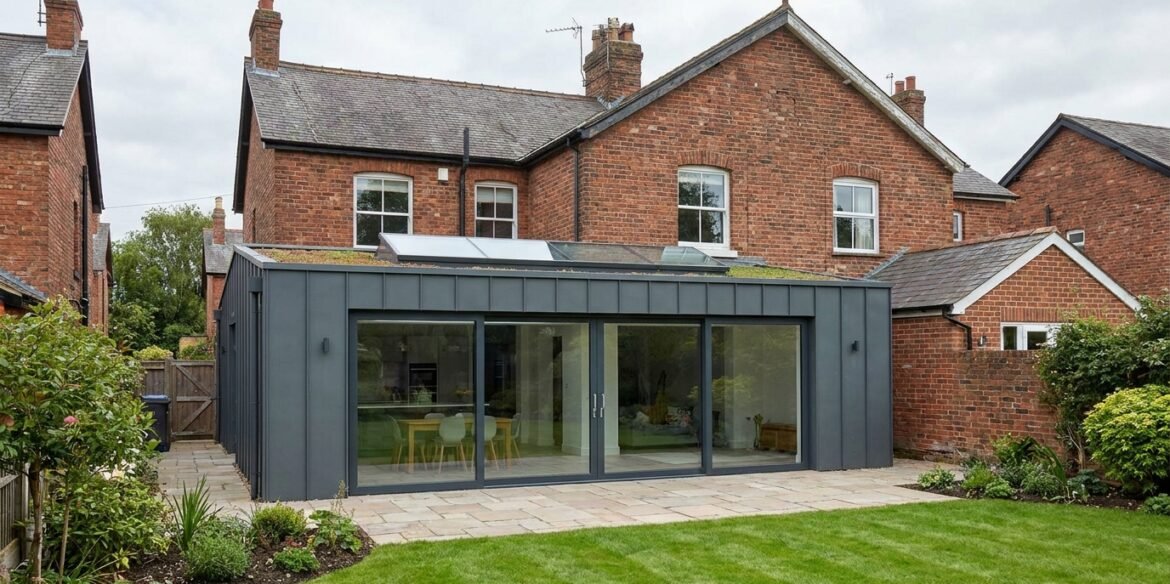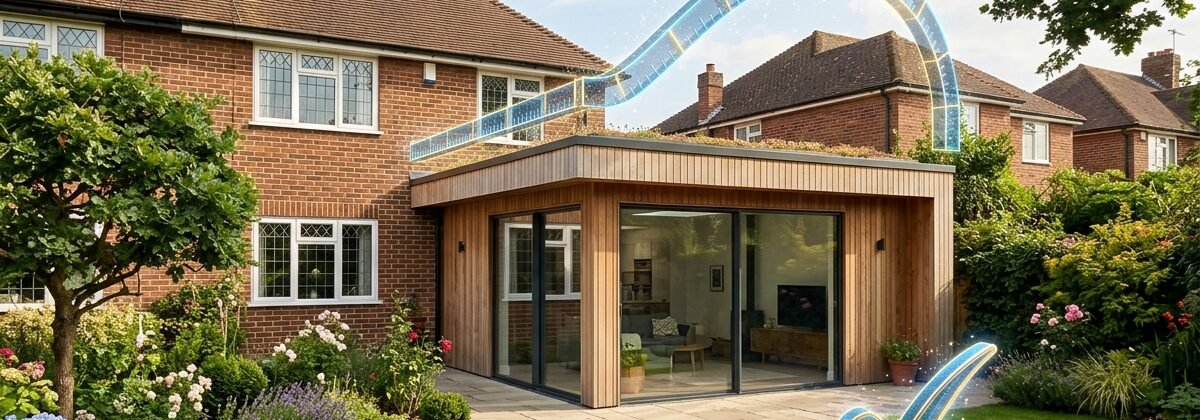
So you’ve got a clear picture in your head of the extension you want — and then someone tells you it’s too big for permitted development. Frustrating, but not necessarily the end of the road.
There’s a planning route you might not have heard of yet: prior approval for a larger home extension, sometimes called the Neighbour Consultation Scheme. It allows certain homeowners to build extensions that go beyond the standard permitted development limits, without needing a full planning permission application.
It sounds too good to be true — but it’s a real and widely used route. Here’s how it actually works.
What Is Prior Approval for a Larger Home Extension?
Under normal permitted development rights, you can extend a detached house by up to 4 metres to the rear (single storey), or 3 metres for semi-detached and terraced houses. For two-storey extensions, the maximum is 3 metres regardless of house type.
Prior approval for larger extensions extends those limits significantly:
- Detached houses: Up to 8 metres for a single-storey rear extension
- Semi-detached and terraced houses: Up to 6 metres for a single-storey rear extension
This is sometimes referred to as the “6 metre and 8 metre rule.” It doesn’t apply to two-storey extensions, and it only covers single-storey rear extensions specifically.
If you want to see the full technical guidance, GOV.UK technical guidance on permitted development sets this out in detail.
Why Is It Called the Neighbour Consultation Scheme?
Good question. Prior approval for larger extensions is tied to a consultation process with your immediate neighbours — which is where the “Neighbour Consultation Scheme” name comes from.
When you apply, the local planning authority notifies the adjoining properties. They have 21 days to raise any objections about the impact of the extension on their amenity — primarily things like overshadowing, loss of light, or the feel of the space.
If no objections are received, or if any objections raised aren’t considered to amount to unacceptable impact, the council must grant prior approval. The process is far narrower than a full planning application — the council cannot consider things like design, aesthetics, or planning policy. It’s focused purely on whether the extension would have an unacceptable impact on neighbouring amenity.
This is what makes it a more straightforward route than planning permission for many projects.
What Are the Key Rules and Limitations?
Prior approval for larger extensions is more flexible than people often expect — but there are conditions:
- Single-storey rear extension only. This route doesn’t apply to side extensions, two-storey extensions, or other types of development.
- Height limits apply. The extension must not exceed 4 metres in height (or 3 metres within 2 metres of a boundary). The eaves height must not exceed that of the existing dwelling.
- Materials should match. The extension should be built from materials that have a similar appearance to the existing house.
- Not applicable in all locations. If your property is in a National Park, Area of Outstanding Natural Beauty (AONB), World Heritage Site, or the Broads, prior approval for larger extensions does not apply — you’d need full planning permission.
- Conservation areas and listed buildings. Listed buildings are outside permitted development altogether. Conservation area restrictions may also limit what’s possible.
- Article 4 Directions. Some local authorities have removed permitted development rights in certain areas via Article 4 Directions. Check this with your LPA first.
It’s also worth noting that prior approval only covers the planning dimension. You’ll still need Building Regulations approval separately — which covers structural adequacy, fire safety, drainage, and energy efficiency.
How Does the Application Process Work?
The prior approval application is submitted to your local planning authority, usually through the Planning Portal. Here’s a rough overview of what’s involved:
- Prepare your application. You’ll need drawings showing the proposed extension — ideally drawn by a professional. A measured survey of the existing property is often the starting point.
- Submit to the LPA. Applications are usually submitted online via the Planning Portal. There is a fee (as of 2025, check the current fee schedule with the Planning Portal — fees have been subject to change).
- Neighbour notification. The council writes to your adjoining neighbours, who have 21 days to comment.
- Decision. If no valid objections are raised, prior approval is confirmed. If objections are raised, the council assesses the impact — they cannot refuse on the basis of design, only on neighbour amenity grounds.
- Commence work. Once prior approval is confirmed, you can proceed with Building Regulations approval and begin construction.
The whole process from submission typically takes around 42 days (the statutory decision period), though many are decided well before that.
Prior Approval vs Full Planning Permission — Which Is Right?
For a single-storey rear extension that exceeds permitted development limits, prior approval is almost always the preferable route — it’s quicker, cheaper, and has a much narrower scope of objection.
Full planning permission becomes necessary when:
- Your proposed extension still exceeds the prior approval limits (i.e. over 8m for detached, or over 6m for semi-detached/terraced)
- Your project involves changes that aren’t covered by prior approval (side extensions, two-storey extensions, etc.)
- Your property has specific restrictions that take it outside permitted development entirely
- You want to do something unusual with the design that could benefit from establishing a planning precedent
In some cases, a conversation with a planning consultant before you finalise your design can save you significant time and money — by making sure you’re pursuing the right route from the start.
What Happens After Prior Approval Is Confirmed?
Prior approval confirmation is great, but it’s not the end of the process. Before you start building, you’ll also need:
- Building Regulations approval. This is a separate application to your local council (or an approved inspector) covering structural, fire, drainage, and energy requirements.
- Structural calculations (if the extension involves any structural elements — most do).
- Potentially a CLPUD. Some clients choose to get a CLPUD (lawful development certificate) alongside or after prior approval, as a belt-and-braces legal record that the development is lawful. This is particularly useful for future sales.
Frequently Asked Questions
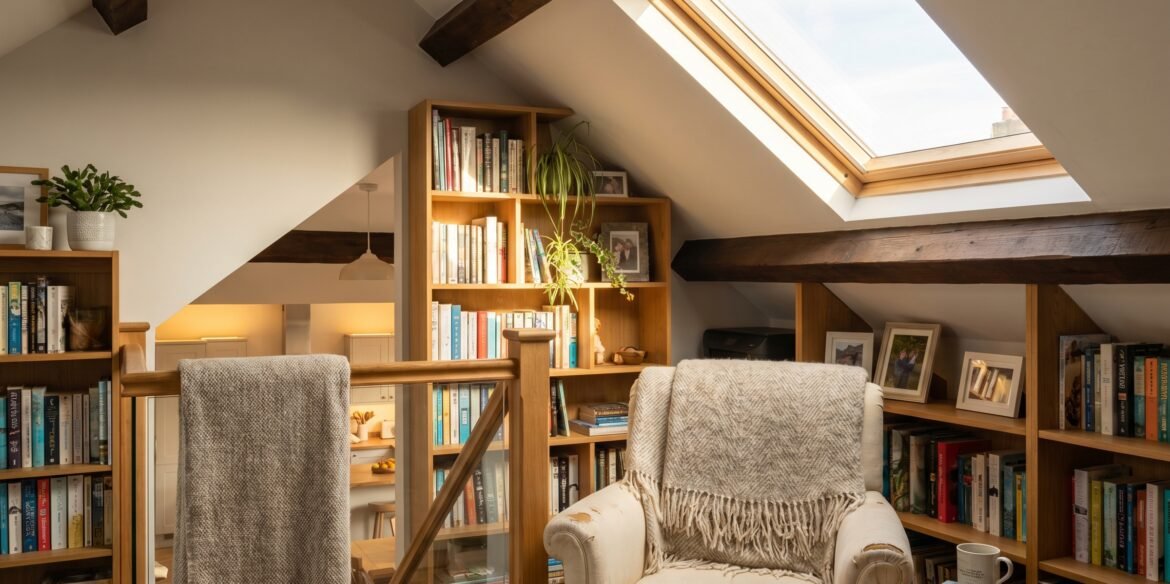
Can I get prior approval for a loft conversion? Prior approval for larger extensions only covers single-storey rear extensions. Loft conversions have their own permitted development rules — they’re often permitted without any application, depending on the volume of space being added and the type of dwelling. Check with a planning consultant before assuming either way.- Does prior approval guarantee I can build the extension? Not quite. It confirms that the council won’t refuse on planning grounds. You still need Building Regulations approval before work begins, and any structural or engineering elements must meet the relevant standards.
- What if a neighbour objects? A neighbour raising concerns doesn’t automatically prevent the extension. The council assesses whether the extension would cause unacceptable impact on their amenity. Objections relating to design or general preference typically carry little weight — only those about genuine amenity impact (light, outlook, etc.) are considered.
- Is prior approval available for flats? No. Permitted development rights for larger extensions only apply to houses, not flats or maisonettes.
- How long is prior approval valid? Prior approval must be implemented within 3 years of the date it’s granted.
- Do I need an architect to apply for prior approval? You don’t have to — but professional drawings significantly reduce the risk of a poorly presented application. An experienced architectural consultant can also advise on whether your design meets all the conditions, before you spend time and money on the application.
Thinking About a Larger Extension?
If your project goes beyond the standard permitted development limits, prior approval could be exactly the route you need. Our team handles prior approval for larger home extensions from initial design through to submission — and we’ll always tell you honestly which planning route makes most sense for your specific project.
Get in touch to discuss your extension plans. No jargon, no obligation.